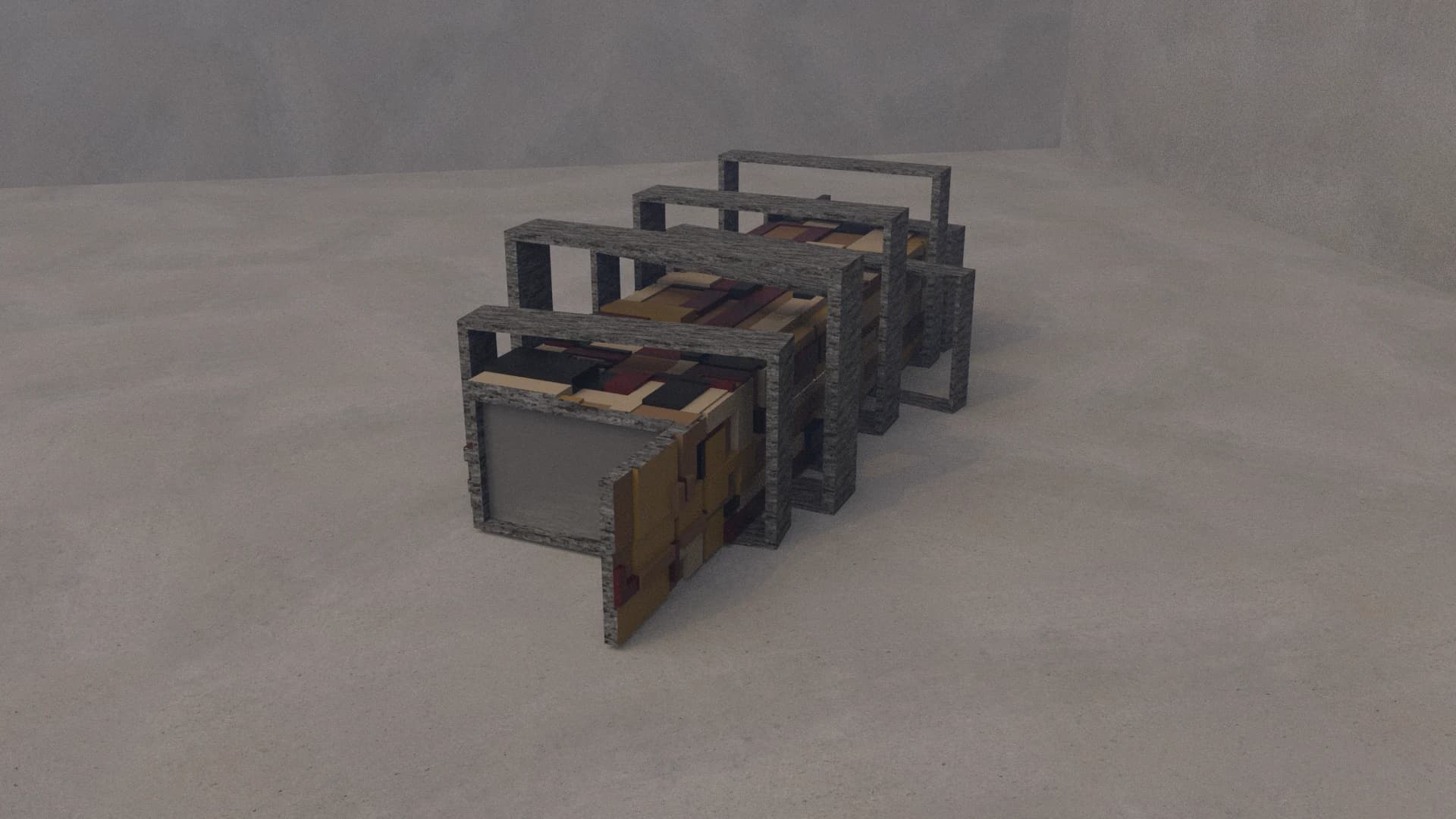
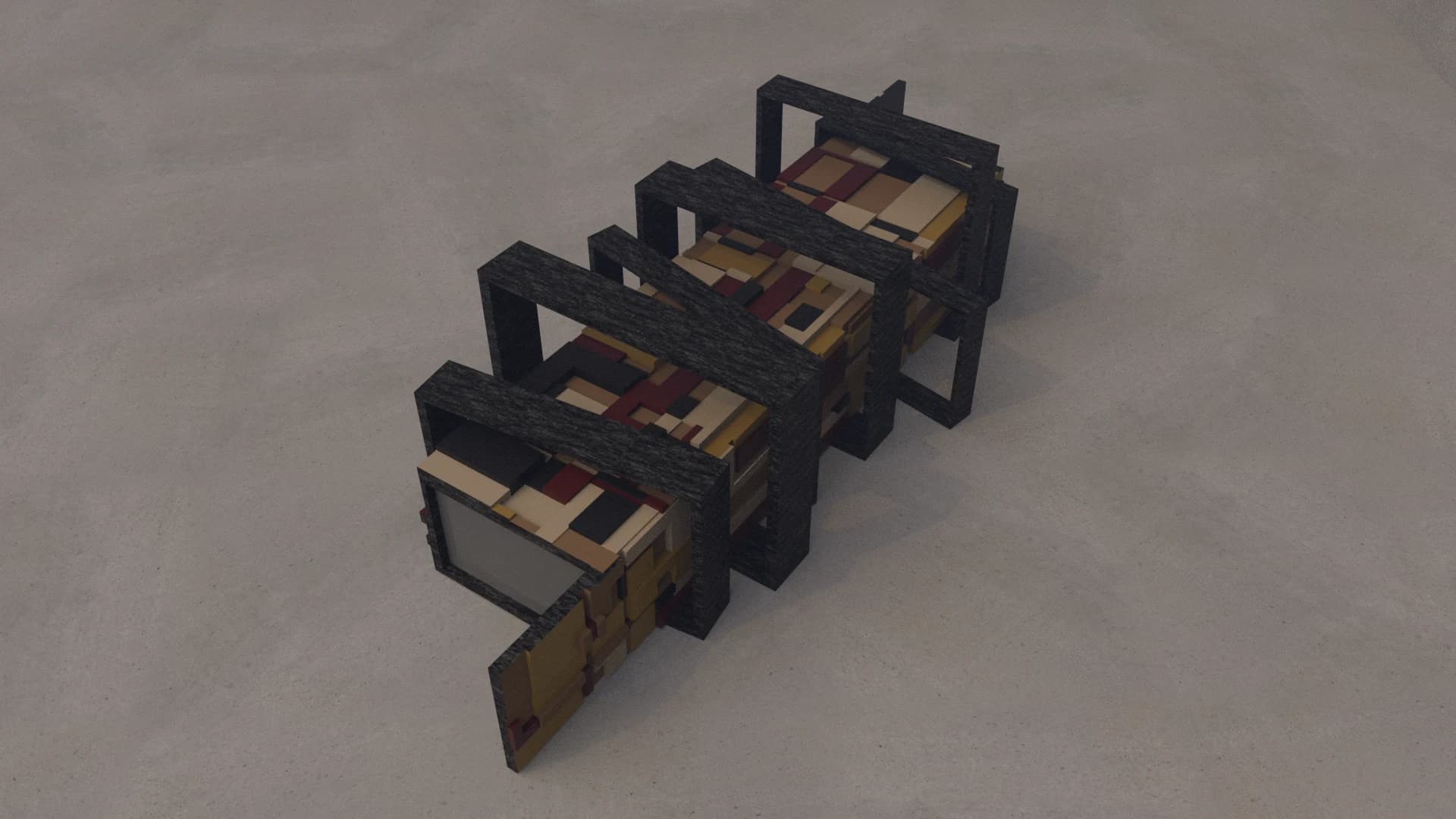
Chromatic Structure begins with a regular sequence of open frames, then introduces panels that change position, orientation and colour along its length. The frame provides continuity; the inserts create moments of density and interruption.
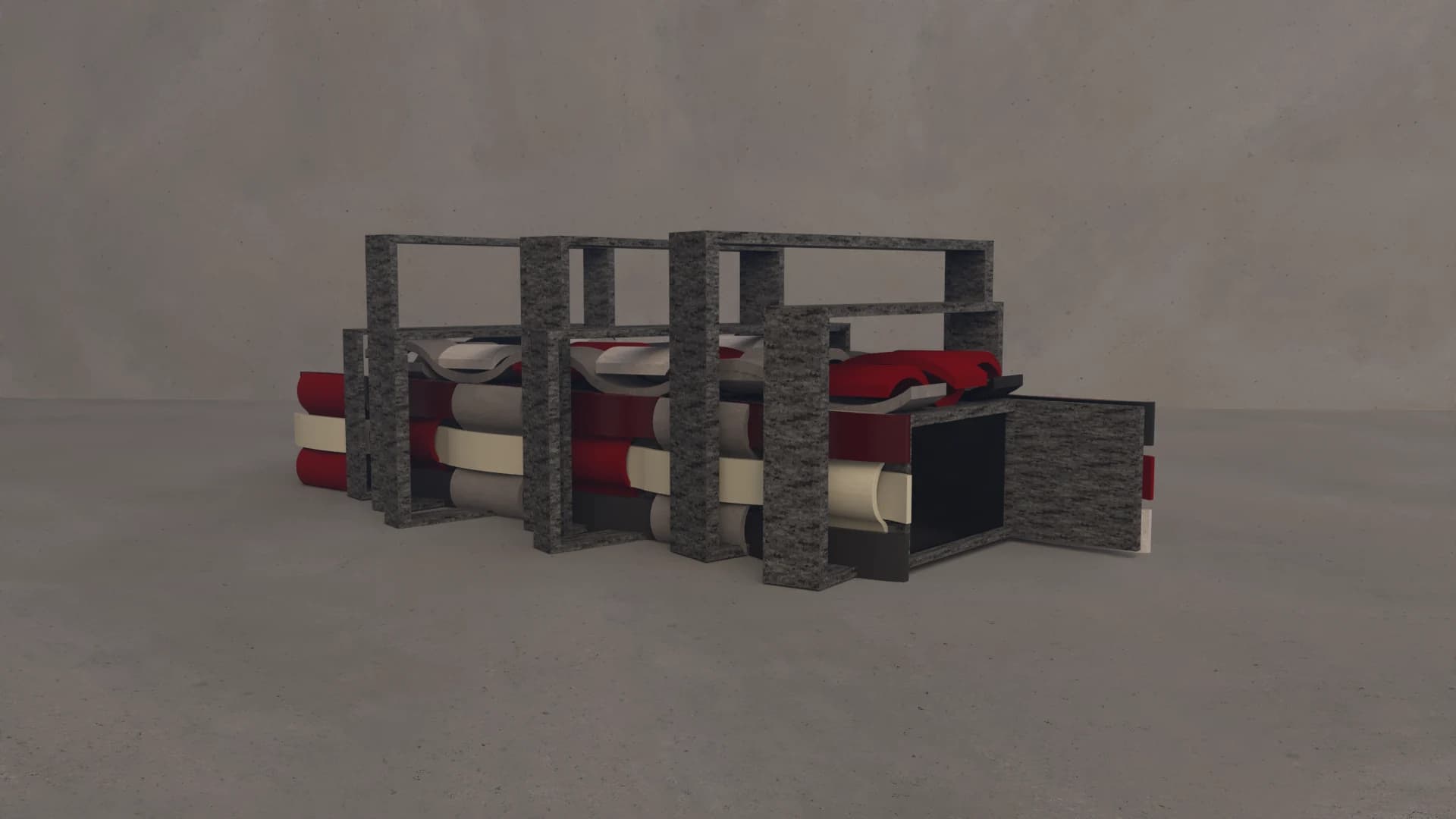
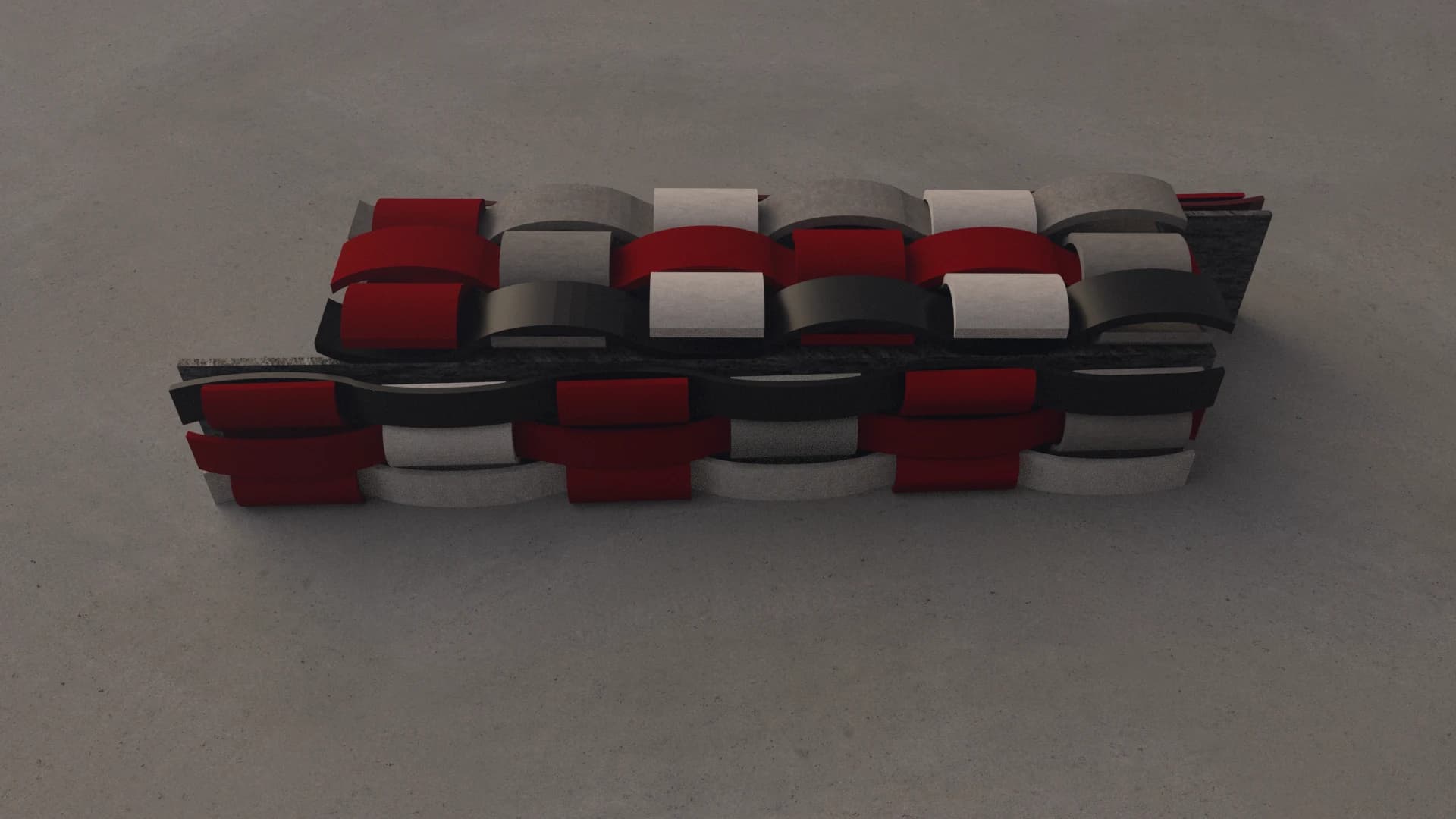
Oblique views make that rhythm legible, while side views flatten the composition into a layered arrangement of lines and surfaces. A softer red-and-white variation records an alternate treatment of the same modular idea. Developed through the Geometricism response work around Josef Albers, the study explores how colour relationships can move beyond a flat image and influence the reading of a three-dimensional structure.